Blog

Master class with a Juilliard professor !

Every young music student has undoubtedly considered the prospect of The Juilliard School at some point or other. You can’t study the arts and not have heard of it – it’s one of the hottest schools on the planet!
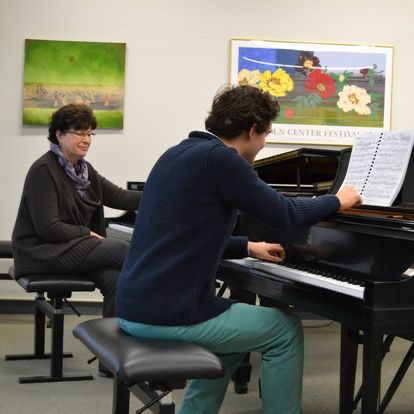
I started studying with Jarred Dunn almost 10 years ago and was impressed that he had studied there. To hear him talk of Juilliard professors as real people with profound teaching capabilities, I was honoured to have even this distant connection with them. His most influential teacher there was Yoheved “Veda” Kaplinsky. He shared stories of his lessons with her and how she changed his musical life. He also told me some of her musical ideas about pieces I was learning that he had studied with her. I was fascinated and always impressed. I guess you could say I knew of her as a larger-than-life figure because she runs the piano department of one of the most famous schools in America!

Hearing stories about Veda Kaplinsky or watching her master classes on YouTube is informative and inspiring, but it doesn’t prepare you for the exhilaration of hearing her speak directly to you about your playing. This past week, I finally got that chance. It was such an honour and I learned so much!

I pre-recorded my piece – Beethoven 32 Variations in C minor – which was sent to Kaplinsky and all participants ahead of time. This took a bit of the pressure off for the day of, but you never know what to expect with these things! Last time I participated in a pre-recorded master class I ended up playing almost the entire piece in the class anyways! Since you never know what to expect, you have to be ready for anything (kind of like going to Juilliard I imagine).

Jarred Dunn and Veda Kaplinsky, The Juilliard School:
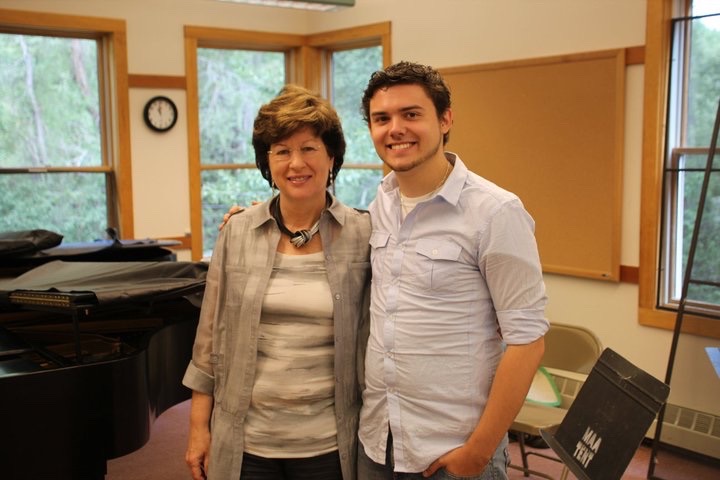
Unlike other master classes I’ve performed in, this time I didn’t play a single note! I listened intently to Veda talk and play while I fervently took notes. It all felt like a whirlwind. I absorbed so much information that it took a few days to sort it all out in my head. To prepare for a class like this, you’ve already got a set idea in your mind about what you want the piece to sound like. Then, a new perspective comes straight at you: change this, change that, that place could be more… etc, etc. But as I tell my students- the more different ways you play something, the stronger and more secure it becomes. It also offers more options to work with in the moment of performance. Because let’s face it, things don’t always go exactly as planned!
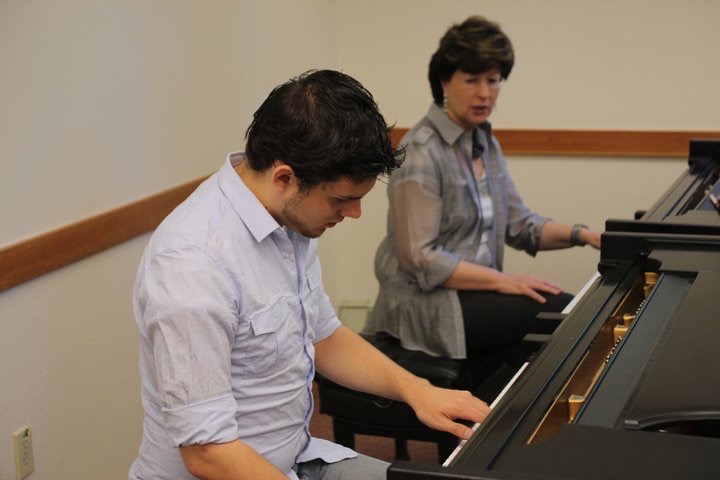

A special thank you to Jarred Dunn for organizing this. Such an incredible experience, as always. I hope to play for Veda Kaplinsky again!
Finally, Live Music 🎶

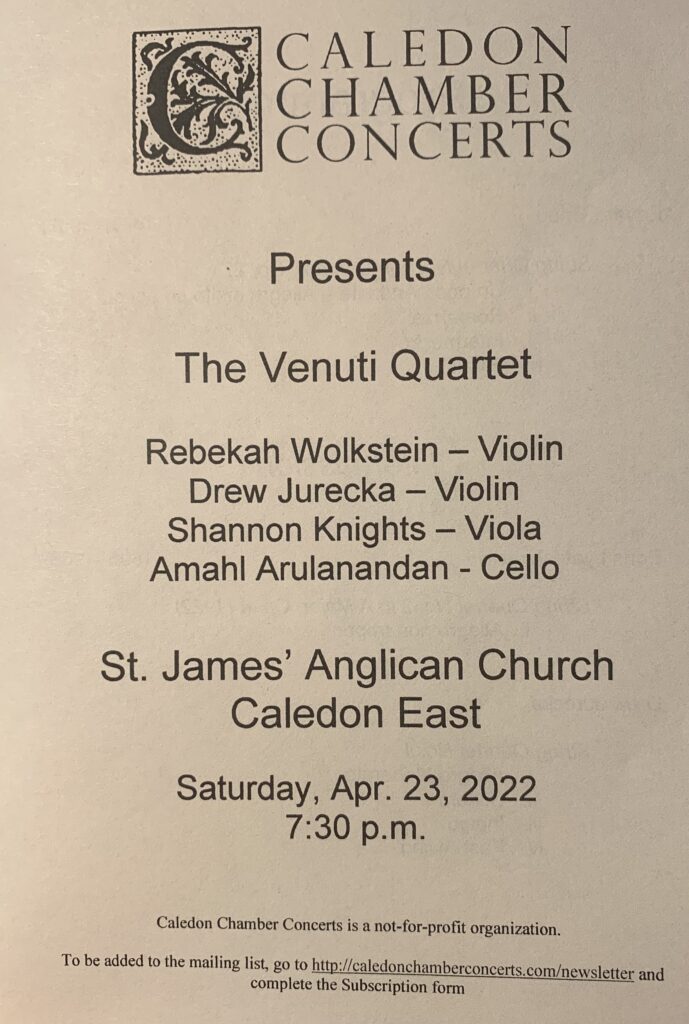
Inspiration at last! There’s nothing like live music to reignite the soul. This was exactly what I needed- a natural escape from life. These musicians were fantastic, and successfully transported me to another realm. A string quartet wasn’t my first choice of concerts to attend, but since (sadly) I missed both featured pianists this season I thought I’d better make it to the last concert no matter what! And how very pleased I am that I did. 

For those of you who don’t know, a string quartet includes 2 violins, a viola and a cello. If I had the time and money, I would LOVE to learn to play the cello. I’ve always been drawn to this instrument. And to hear it live, so up close, and in conversation with the three other stringed instruments… it was almost surreal. Definitely something I want to see again! 


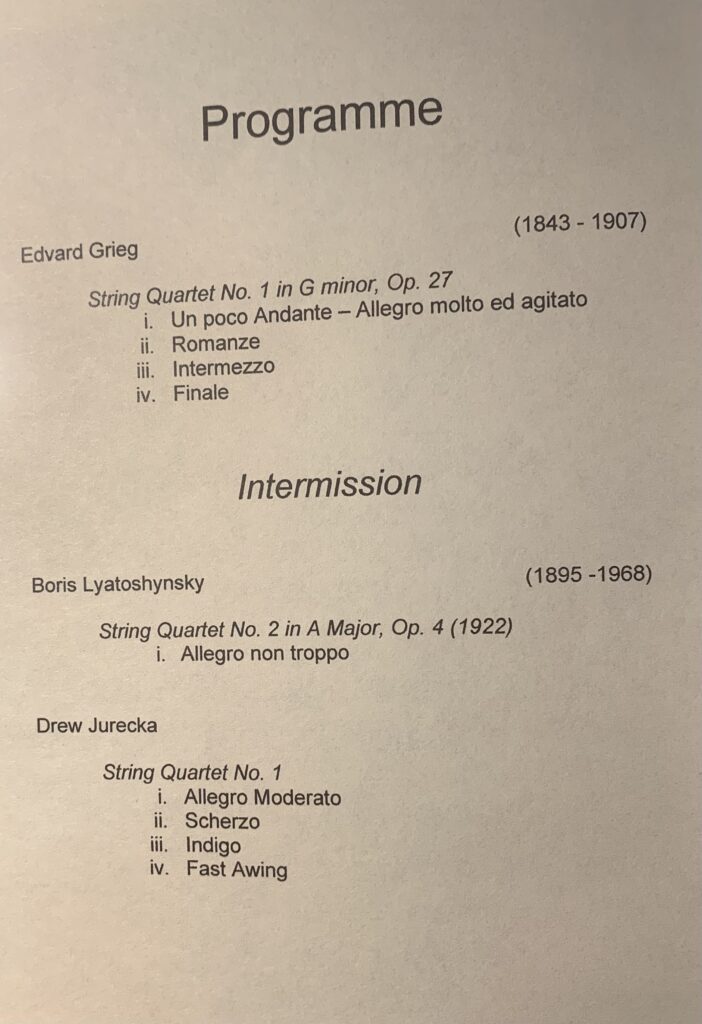
This particular concert had a special treat for the final piece. It was a work written by one of the performers! It’s not often you get to experience something like this these days. Of course, hundreds of years ago this was the norm. Not anymore. So it was an honour to be present for this, especially since it was the premier! They had performed one of the four movements before, but this was the first time the work had been presented to the public as a whole. I was blown away. The 4th movement even included an improvisation by the composer/violinist while the other three instruments played their written accompaniment parts. It was one of those concerts where you get to the end and want to ask them to play it again from the top! 

Caledon chamber concert series is held in a church, but not in the pews (so it’s a little more comfortable). They built a special room intended for concerts just like this one. It’s such an intimate setting- I was only about four feet away from the musicians! There’s never a huge crowd, which is perfect for me. It’s so much more personal and moving to experience music like this. The tickets are only $40, so you can’t go wrong! You also get to converse with the performers after, which is something you rarely get to do at bigger venues (at least not without waiting in a long line). 

Maybe you can already tell, but I have to say that this concert series holds a special place in my heart. Aside from the fact that it’s organized by two of my dear friends, Gordon and Elizabeth, it is also the place that inspired me to get back into serious practicing after a break that lasted far too long (I won’t say how long, but we are talking years 😅). I was asked if I could turn pages for a pianist who was part of a trio. As I was sitting there that night, I realized I was sitting in the wrong seat. I wanted to be back on the piano bench again. ❤️

If you’re interested in checking out what’s coming up next season, please go to: caledonchamberconcerts.com

In the meantime, you can check out one of their videos! They had a different cellist at the concert this past weekend, but he certainly did not disappoint 😊

Music and… Construction!

Some of you may have noticed that my blog posts have been scarce recently. It’s because I picked up a second job… in construction! Even though it’s only part-time, the days can be very long; sometimes more than 17 hours if you include the commute. The priority has been to balance teaching, practicing and of course my  construction shifts – it’s been a bit of an adjustment for me.

Should a pianist be doing construction? Probably not!! I have to be very careful with my hands. And very careful about how I practice the day after construction. My hands, wrists and arms are always sore and tired. I have to spend a lot of time warming up with slow, careful practice, being sure to gently stretch the fingers. 

When I was growing up, my piano teacher was very unhappy about me doing gymnastics and basketball- the risk of damaging the hands is too great! If only she could see me now 😅

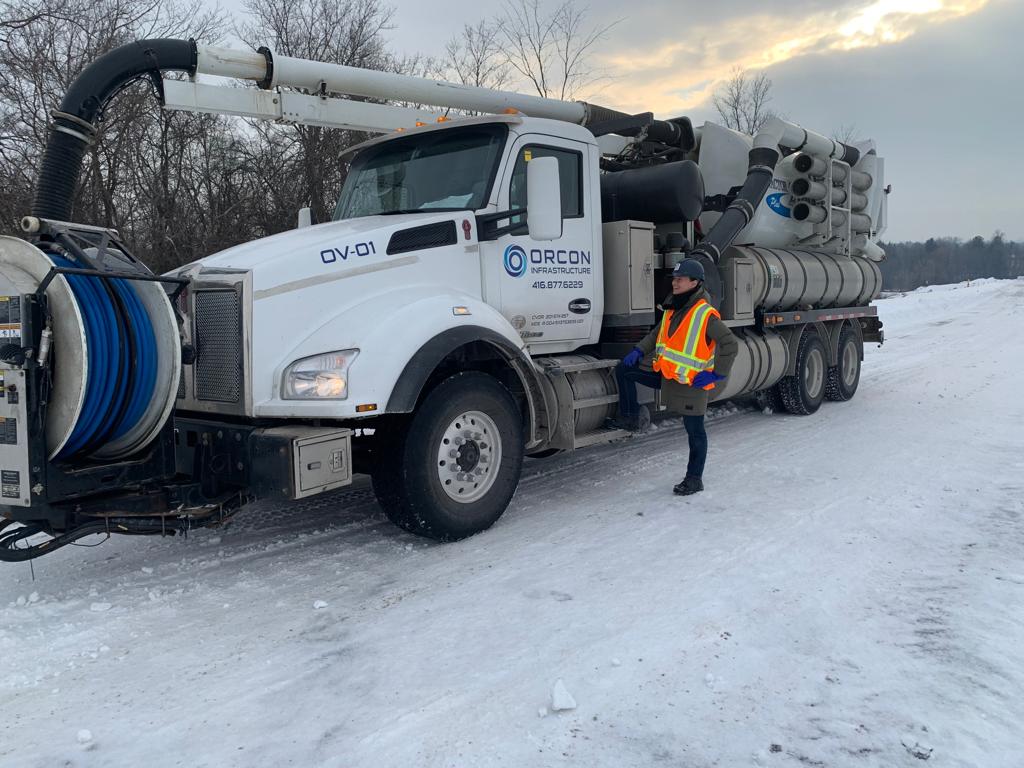
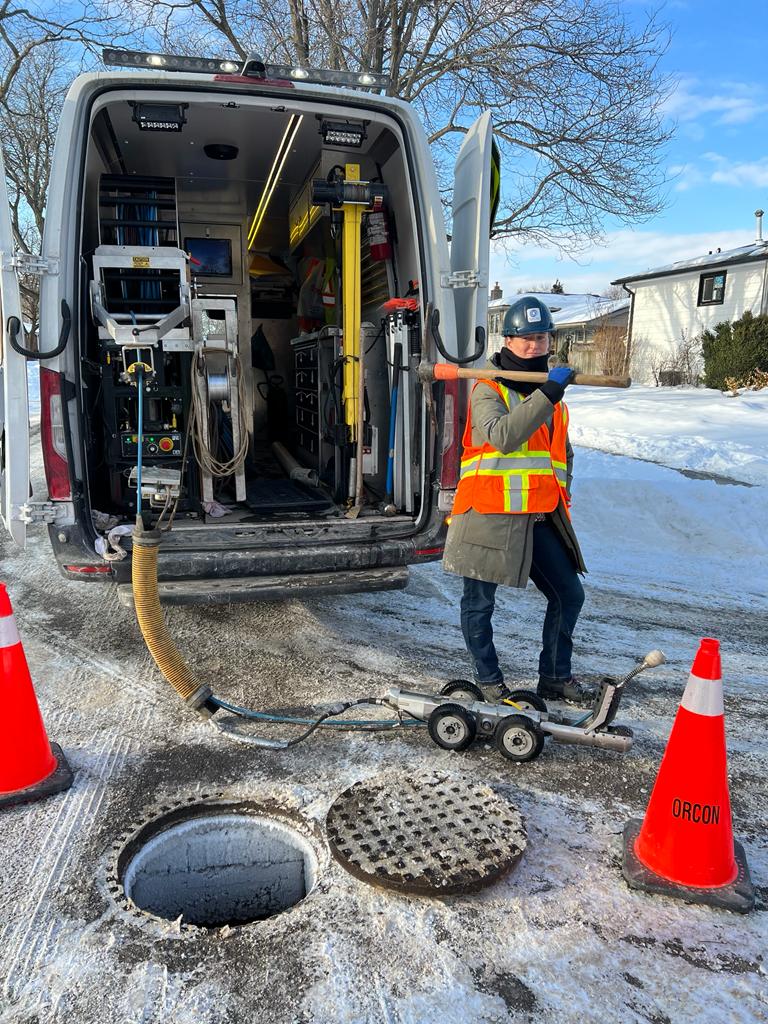
Why work construction? Put simply, I have to support myself. I’ve been looking for part time work for the past year or two- even applied a few places, but nothing seemed to either be available or fit right. It’s been difficult building up a business in a new city during a pandemic, and teaching piano is not sufficient just yet. A childhood friend of mine, Stephanie Oram (who took piano lessons from the same piano teacher as me growing up!), owns a construction company (Orcon Infrastructure). She had offered me work there for some time. I was trying to avoid it because of the risk, but finally broke down and tried it out. Turns out I love it!! It’s hard work, but it’s certainly something different. I like working to overcome the challenges we face, and I get to be outside (which can be difficult in winter sometimes), and move around more. Much of my life is spent on a piano bench, which can be exhausting in its own way. I am diligent about exercising to stay healthy and (somewhat) fit, but it’s hard to get it all in. Construction offers an excuse for me to get out of the house and go do something, without the guilt of forfeiting practice time! 

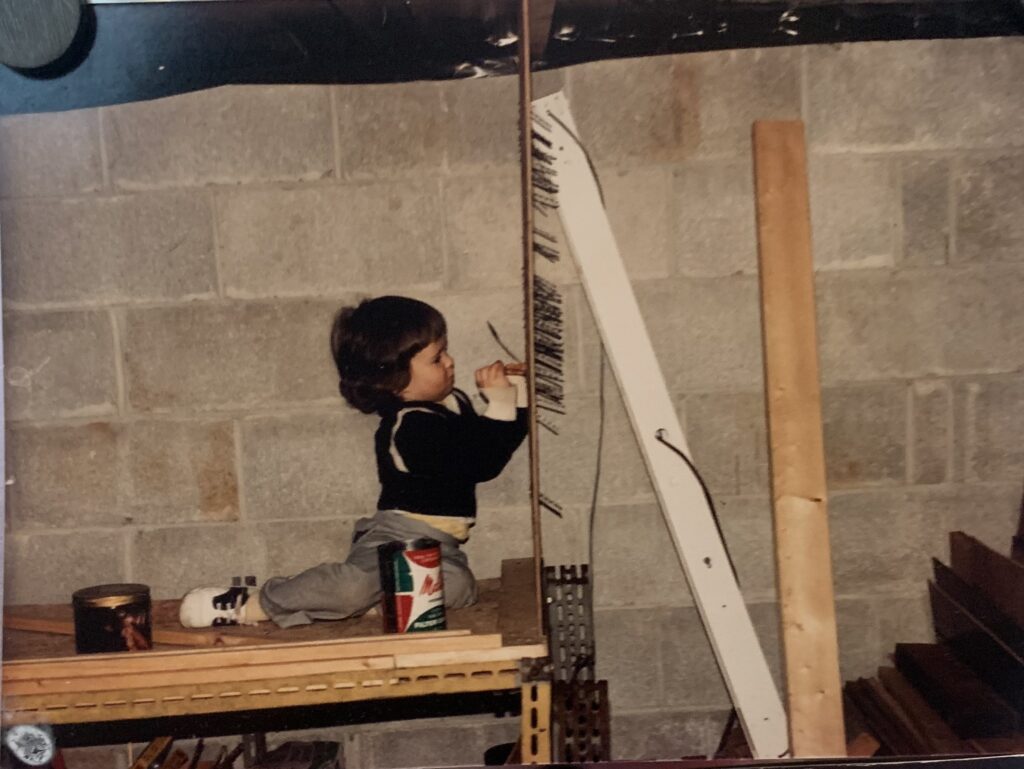
I sort of feel like I’m going back to my roots with this one, too. My Dad was always fixing things around the house- my parents almost never hired anyone to do anything because he could do it all himself. I used to sit in the basement with him for hours, hammering nails into pegboard 😂 while he worked away on whatever project was on the go at the time. Even as I got older, I was always interested in learning about what he was doing and helping out when I could. I even went to his work on ‘take your kid to work day’ and drove the forklift with him!

Balance in life is very important to me. Piano always comes first, but I’m always up for trying new things. I organize myself so I can do the things that keep me feeling good, and stay open-minded about new opportunities that may arise. The way I look at it is: everything that I do helps me to become a better teacher and musician! It’s all about the way I approach and apply these new experiences when I sit down to practice. Any new point of view can always be put to good use if looked at in the right light 😉

The Chopin Competition

The Olympics of piano, as I like to call it 😊

The Chopin competition takes place every 5 years (although this time we waited 6 due to covid), in Warsaw, Poland. For the first time in history, Canada won the grand prize!! 🇨🇦 We also placed 6th, which is no small feat. Over 500 pianists from 53 countries around the world applied to be contestants in this competition. 160 of these were admitted to perform in the preliminary round. This in itself is an honour. 87 of those pianists were accepted into the competition. From there, more competitors were eliminated with each of the three stages, until there were only finalists. Talk about gruelling! The amount of pressure is unimaginable. All of the competitors had been dreaming of this moment, many of them for their entire lives. If they win, they’re basically set for life. They will never lack musical engagements; people will always know who they are in the classical music world. They will travel the world playing concerts, students will want to learn from them, professional musicians will want to collaborate with them, they will record albums…. and this is all on top of the €40,000 grand prize! (This amounts to nearly $60,000 CAD). 

Back to the competition itself. The pressure increases with each stage. The repertoire requirements are extremely demanding, and if you make a mistake you’re eliminated automatically. Wrong notes are unacceptable. This is why there is some controversy surrounding these types of competitions. When Chopin played his own compositions, he was always changing them by adding embellishments, changing dynamics, experimenting with different phrasing, etc. He was even changing the notes he had written down, up until the very last second when he had to send it to the publisher. Often his various publishers would receive different copies if he sent them off at even slightly varied times. To him, the utmost importance was that of musical expression. So why must the performances for a competition dedicated to his music be note-perfect? Doesn’t this inhibit musical creativity and expression? Aren’t the performers so terrified of wrong notes that they aren’t willing to try out their best ideas? I guess you just have to be the most musical of the perfect performances 😅 I certainly think that deserves an award!🥇

Here is Canada’s champion pianist, Bruce (Xiaoyu) Liu’s performance in stage 3:

Polonaise Workshop/Master Class Part II

September is always a busy month with going back to school. It takes a few weeks to get everyone’s schedules sorted out and back into a practice routine. Add a couple of master classes to the mix, and the whole month just flies by! 

My first event was a Polonaise weekend. It began with a workshop delivered by Jarred Dunn. Having lived and studied in Poland for a number of years, he has insight into this music that few people in Canada have to offer. He illuminates the music of Chopin and the Polish culture, which enriches our practice and performance of the music. 
The next day was a master class with Polish teacher Krzysztof Jabłoński, who I had never met before but had heard great things about. And great, he certainly is! Such a fabulous pianist, and a jolly person! It was very entertaining to see him working with the other students, and incredibly inspiring. Some of the pieces he hadn’t touched since he was in high school, yet it seemed so natural and effortless for him to play them, regardless of how technically demanding they were. 

I loved his camera setup! He had about 4 or 5 different cameras arranged at different angles, and could switch between them with the click of a button. Need to see what he’s doing with the pedal? No problem! Care for a zoom in on the LH? Coming right up! Of course he had a camera facing him straight on, so you could watch his animated expressions as he explained things to you. 

I would be delighted to have an opportunity to learn from prof. Jabłoński again in the future! Thank you, Jarred, for arranging yet another successful and inspiring musical weekend! 

As always, if anyone is interested in trying something like this out- let me know! Spectators are welcome, as well as playing participants. 

Check out these videos of Jabłoński! The first is him playing a Polonaise, and in the second you can hear him talk a bit about Polish music and play the E Minor Chopin Concerto.

Welcome Back!

I hope everyone enjoyed their summer, and is geared up to begin this new and promising academic year! I’m excited to start in-person lessons again, and can’t wait to see what everyone‘s been working on this summer! ☀️

As always, I will arrange two recitals (most likely Facebook video recitals again), and look forward to preparing everyone for our first performance in December. 

I have another interview lined up this semester as well- can’t wait to share!

There are some online master classes and workshops I plan to attend, organized by Jarred Dunn, featuring some special guest teachers from Europe and the United States. 

One of the great things about studying music is that there is always more to learn and experience! 🎶

I hope you enjoy the fruits of some summer practice- Oscar Peterson’s ‘Hymn to Freedom’ 💜 

Tuning Out

To start off, I will answer Seymour’s first question from our zoom class.
The question was this: Why do you study music?

Answer: I love music. It’s what keeps me going. It’s always been there for me as a comfort and a challenge throughout my life. I would go as far as to say that it’s brought me back to life a few times. It offers an escape from the trials of life when I need it most, and with absolutely no negative effects. Only positive. I always feel better after a practice session, even if I was already feeling good to begin with. Music is constantly pushing me to new limits. All around, it helps me to be a better person. I teach music because I want for other people to be able to have this as well. It really makes a difference in a human being. 

I continue to study music because the more I know about piano and music, the better teacher I will be. Sure, it can be a love/hate relationship at times! But that’s part of the beauty of it. It’s something that will be with you until the end, no matter what. 

Plus (and this is a huge plus!)… being in music, you get to meet some truly remarkable and brilliant people. This is so inspiring in life!! 

To those of you who have read my blog- thank you! It has been nice to know these words weren’t just lost in the wind. 

A (school) year long project… and one out of my comfort zone… I’m happy to say I have completed this goal! What a relief to finally be at the finish line 😀 I’m not saying I’ll never write a blog post again! I’m just not going to commit to doing it every week. I’m sure that my handful of readers will survive 😉 I’ll take it casually next school year, and just write when I’m inspired to write, if there’s something to write about. Here’s hoping that there is!! This blog has got me thinking about my teaching and piano life in a slightly different way. Usually, I just go about living it. By removing myself from it to write about it, I’ve gained a bit of a different perspective- always a good thing!

I wanted to send a special thank you out to my friend Christina Philips! Without you, this blog would never have existed. Thank you!! 🤗

If anyone has any questions, or topics you would like me to write about, please feel free to contact me directly at glasshouseofmusic@gmail.com. 

I hope everyone has a beautiful, relaxing, and safe summer this year! 

Ciao for now‼️😌🎶💞☀️🎹

For those of you who don’t have Facebook, I’ve included my recital video here. Enjoy!

Master Class with Seymour Bernstein

The zoom master class with Seymour this past Sunday was incredible! I learned SO much. It was supposed to be 2 hours but ended up running for 3! The time just flew by. Each student only had 15 minutes of individual attention, but the whole group benefited so much from the entire class. You can learn so much by watching someone else being taught! I had a ton of questions ready to ask him (in standard form of me being over prepared 😊), and we got through quite a few of them. He helped bring my technique to the next level in some particularly challenging passages, and showed me some practice ideas that were extremely helpful. I’m so glad I participated, and am already on the list of participants for the next one! 😀

When Seymour made his surprise appearance at studio class the previous week, he presented us with 2 questions. Today I will answer this one: Why would Jarred invite us to play for other teachers? (Sadly, music teachers are known for being quite territorial over students). 

Here is my answer:

Everyone has a different take on music; a different way in. Sometimes you just need something explained to you in a different way to finally make it click. Or maybe you just need to hear it in the exact same way but from somebody different 😅 to really drive the point home. Someone who hasn’t heard you play before might notice something that your regular teacher hasn’t addressed because they have been focusing on other things. It’s easy to get lost in the process of developing a particular skill, so it’s always good to have a fresh pair of ears and eyes! 

Music is very personal; you need to make it your own. If you’re only hearing input from one other voice, that makes it more challenging to do. Opening yourself up to different ideas makes it easier to find what works for you. Options are always a good thing!

It’s also good from a performance aspect, because you’re playing in front of someone formidable and unfamiliar. It really takes you out of your comfort zone, which is vital for growth. 

I have always encouraged my higher level students to take lessons with other teachers as well, and will continue to make this part of my practice. Two of my adult students attended this seminar as spectators, and they both loved it! 

Share the knowledge!! 🤓🎶🧡

Tonebase… and SEYMOUR!

I recently joined a new platform called tonebase and am loving it! It was actually founded in 2017, but I heard about it last summer for the first time, when Jarred Dunn created a video for them. I’ve been watching snippets of videos, just biding my time until I could make the leap and purchase a subscription. I am thrilled to have access to all of their videos now! They have lessons on specific pieces, live seminars where you can ask questions, performances, interviews with famous pianists and pedagogues, ear training, improv, and technique videos… basically anything you can think of that would help to become better acquainted with the world of classical piano! 😀👏🎹 They also have a whole platform for classical guitar as well! 😉

The first video I watched was an interview with Seymour Bernstein. I became enamoured with this man years ago, when I saw the documentary about him “Seymour: An Introduction “ by Ethan Hawke. So you can imagine my excitement when Jarred announced that he would be doing a zoom master class and I was invited to attend!! The master class is happening this Sunday, June 13th. I’ve been looking forward to this for over a month now, so you can imagine my delight when he made a surprise appearance at zoom studio class (hosted by Jarred) last weekend!! 🥳 Everyone in the class was thrilled, and nerves shot through the roof! I was trembling as I was playing for him. I haven’t felt nerves like that in years! Hopefully we got most of our jitters out last weekend, so we can relax a bit more this Sunday and really get some work done with Seymour! 😀💖

Here’s a video so you can hear him speak and play, to see why I’m so excited about this! What an incredible human being.

Do What? A Duet!

One of the biggest challenges for most kids learning the piano, is all the alone time. Children like interacting with others and crave constant encouragement. Then again, don’t we all? 😏

Here’s a solution: learn a duet! It can be so much more fun to play piano with someone. Sure, the work still needs to be done independently, but it’s a huge motivator to know you will get to play with someone at the end of the independent practice. What better reward than to go play with your friends, right?! At the moment we are pretty limited, but those of you who have more than one child learning the piano (or other instruments)- have them try a duet! In fact, there will be at least one or two featured in this month’s Facebook recital at Glass House of Music. 🎶

Duets are not only fun and motivating, but also hugely beneficial! When you’re playing music with someone else, you have to be even more focused than when it’s just you. You have to know your part so well that you can keep going even if you play some wrong notes, miss some notes entirely, or if you hear any wrong or missed notes from your partner as well! You can’t let it throw you off. You will be hearing someone else playing something completely different, at the same time you are trying to execute your part. This takes immense concentration! You have to remember that if you make a mistake and stop, your partner will be completely lost. How are they supposed to know what you’re going to do next- Go back? To where? Keep going? When? 😅 Of course, mistakes happen- you just need to have a plan so you will both know what to do in the moment (and lots of rehearsal/practice time together)! All of this planning and coordinating really does bring you to a deeper understanding of how music works. Once you’re comfortable with duets, you can always move on to trying a trio! 😀 Now those are a ton of fun!! 🥳

Duets are actually one of my favourite features of the Faber lesson book series that I use for beginners. Almost every piece in the book has a teacher duet part written to go along with it. It’s a great way to ease students into collaborative playing! 🤗➕🤗➕🤗